Tech Neck, Desk Slouch, and Phone Posture: The New Health Crisis
If you’ve ever caught yourself hunched over your phone scrolling through social media, or slumped in your office chair staring at a screen for hours, you already know that something doesn’t feel right. Maybe your neck aches by midafternoon. Maybe your upper back feels tight before dinner. Maybe you’re waking up with headaches you didn’t used to have. These aren’t random complaints — they’re signals. And here in North Hampton, NH, Dr. Mark Arsenault at Arsenault Family Chiropractic Center is seeing more and more patients come through the door with exactly these kinds of concerns. The cause? A modern epidemic that’s quietly reshaping spinal health across all age groups: tech neck, desk slouch, and poor phone posture.
What is tech neck? Tech neck is a term used to describe the strain placed on the cervical spine — the neck — when a person tilts their head forward and downward for extended periods, typically while using a phone, tablet, or computer. The result is a cascade of musculoskeletal stress that can affect the neck, shoulders, upper back, and even the lower back over time.
What Is Tech Neck, Desk Slouch, and Phone Posture?
Let’s start with the basics, because understanding the problem is the first step toward fixing it. The human head weighs roughly 10 to 12 pounds when it’s balanced directly over the shoulders in a neutral position. That’s the way our bodies were designed to work — the spine stacked vertically, with each structure supporting the one above it. But the moment you tilt your head forward, even slightly, the effective load on your cervical spine increases dramatically. At just a 15-degree forward tilt, that load can increase to around 27 pounds. At 60 degrees — which is roughly where most people hold their heads while looking down at a phone — that effective load can approach 60 pounds or more.
Tech neck refers specifically to the strain and dysfunction that develops in the neck and upper spine as a result of this prolonged forward head posture. Desk slouch is the companion problem: the collapse of the thoracic spine (your mid-back) that happens when you sit for long periods without adequate support or awareness. Phone posture encompasses both — and extends to the way we hunch our shoulders, round our upper backs, and compress our chests when we’re deep in our screens. Together, these three patterns create a perfect storm of postural stress that accumulates quietly over months and years.

Why This Modern Posture Crisis Matters for Your Health
This isn’t just about aesthetics or looking confident. Poor posture driven by technology use has real, measurable consequences for the musculoskeletal and nervous systems. When the head consistently juts forward and the upper back rounds, the muscles at the back of the neck and shoulders are forced to work much harder than they should. Over time, they become chronically fatigued, tight, and tender. The muscles at the front of the neck and chest can shorten and pull the posture further forward, creating a self-reinforcing cycle that becomes harder to correct the longer it goes on.
Beyond the muscles, the joints and discs of the cervical and thoracic spine are also affected. Sustained poor posture can contribute to accelerated wear on spinal joints, altered disc mechanics, and changes in spinal curvature. Researchers and clinicians in the musculoskeletal field have increasingly recognized that forward head posture is associated with a range of symptoms — not just neck pain, but also headaches, shoulder tension, jaw discomfort, numbness into the arms and hands, and even breathing difficulties. The thoracic spine and rib cage play an important role in respiratory mechanics, and a chronically rounded mid-back can limit the full expansion of the lungs.
Here in North Hampton, NH, this is something Dr. Mark Arsenault and the team at Arsenault Family Chiropractic Center address on a daily basis. It affects teenagers on their phones, remote workers at makeshift home desks, professionals commuting and staring at laptops, and even young children using tablets. No age group is immune.
Common Causes and Risk Factors
Understanding what drives tech neck and desk slouch makes it easier to address the root problem rather than just chasing symptoms. The most common contributors include prolonged screen time without postural breaks, workstations that aren’t ergonomically set up, the habit of holding phones at waist or chest level instead of eye level, and extended periods of sitting without adequate lumbar and thoracic support.
Certain lifestyle and occupational factors also increase risk. People who work entirely from home often lack the structured ergonomic setup of a traditional office environment. Students carry heavy backpacks and spend hours hunched over desks. Athletes who train hard may develop muscular imbalances that worsen forward head posture. And perhaps most overlooked of all — the hours we spend on our phones during leisure time add up faster than most people realize. Even conservative estimates suggest many adults spend five or more hours daily on mobile devices, and much of that time is spent looking down.
Signs and Symptoms to Watch For
Tech neck and poor posture rarely announce themselves with dramatic, sudden pain. Instead, they tend to build gradually until the symptoms become impossible to ignore. Some of the most common signs that technology use may be affecting your spinal health include persistent neck stiffness or soreness — especially at the end of the day, tension headaches that start at the base of the skull and radiate toward the forehead, aching or tightness between the shoulder blades, and a feeling of fatigue or heaviness in the upper body.
More advanced cases may include tingling or numbness in the arms, hands, or fingers — which can indicate that nerve pathways are being compromised. Some patients also report jaw pain or clicking, difficulty turning the head fully from side to side, or a noticeable rounding of the upper back that doesn’t easily self-correct. If you’ve noticed that your head seems to sit further forward than it used to, or that your chin protrudes when you look in a mirror from the side, that’s an important cue worth taking seriously.
Dr. Mark Arsenault often reminds patients that these symptoms don’t have to become severe before you seek an evaluation. Early intervention tends to produce better outcomes than waiting until the pain is unbearable.
How Chiropractic Care Fits In
Chiropractic care is one of the most well-established conservative approaches for addressing the spinal and musculoskeletal effects of poor posture. It’s non-surgical, drug-free, and highly individualized — which makes it a sensible first step for most people dealing with tech neck, desk slouch, or phone-related postural problems. The American College of Physicians and other major health bodies have consistently recommended conservative care — including spinal manipulation — as a first-line approach for musculoskeletal pain.
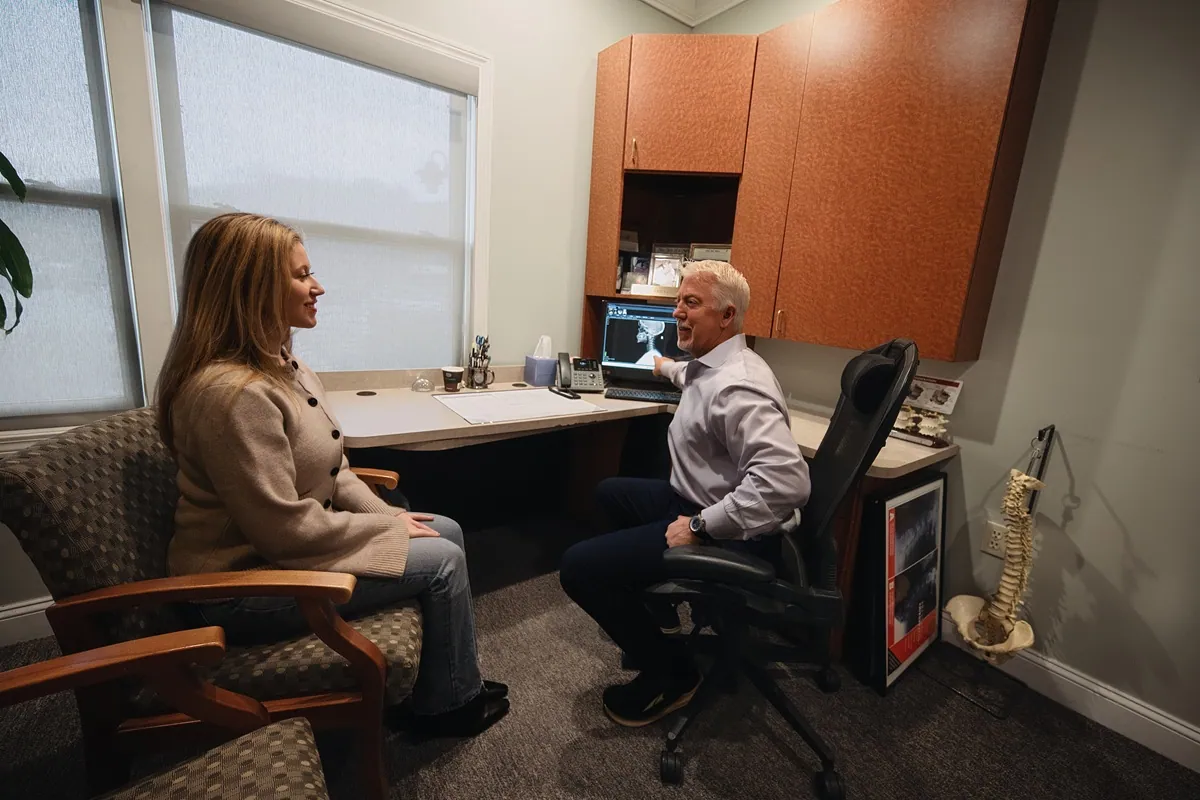
At Arsenault Family Chiropractic Center in North Hampton, NH, Dr. Mark Arsenault begins with a thorough evaluation to understand the full picture of how posture is affecting your spine. This typically includes an assessment of your cervical and thoracic alignment, the range of motion in your neck and shoulders, areas of muscular tension or tenderness, and any neurological signs that may warrant further attention. No two patients present exactly the same way, and that’s why a personalized care plan matters.
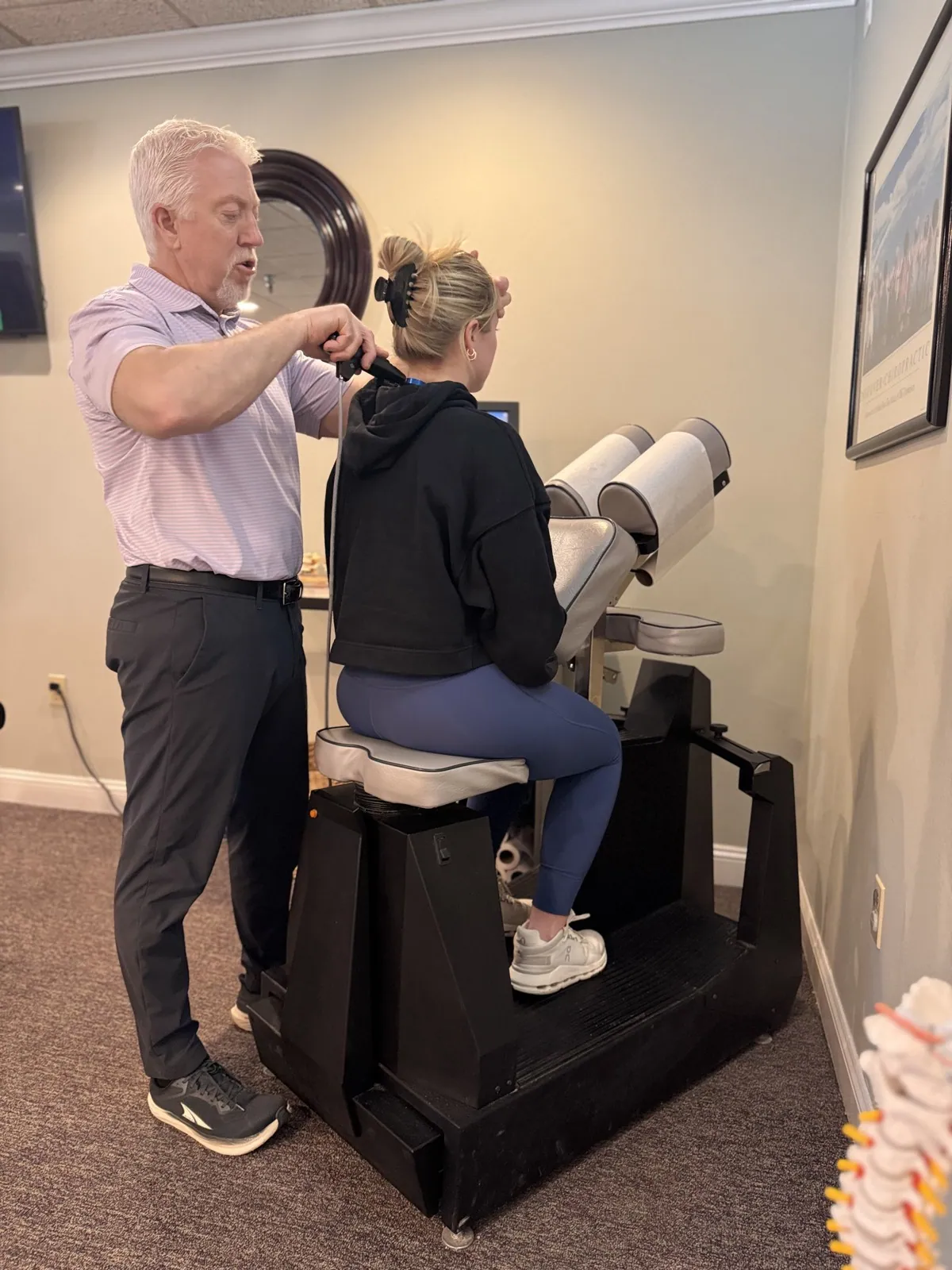
Chiropractic adjustments can help restore better joint motion and alignment in areas of the spine that have become restricted or shifted due to postural stress. This can reduce pain and stiffness, and help the body function more efficiently. Many patients find that consistent chiropractic care — combined with changes to their workstation setup and daily habits — makes a meaningful difference in how they feel throughout the day. Soft tissue work, targeted exercises, and postural re-education are often part of the plan as well, addressing the muscular and movement components of the problem alongside the spinal ones.
Practical Tips to Protect Your Posture Every Day
While chiropractic care addresses what’s already happened to your spine, good daily habits are what prevent the problem from coming back. One of the most impactful changes you can make is adjusting where you hold your phone. Most people hold it at chest or lap level, which forces the head down. Raising your phone to eye level — even if it feels awkward at first — dramatically reduces the load on your cervical spine over time.
For those working at a desk, the monitor height matters enormously. The top of your screen should be at or slightly below eye level, and the screen should be an arm’s length away. Your feet should be flat on the floor or a footrest, your hips at roughly a 90-degree angle, and your lower back should be supported by the chair’s lumbar curve. Shoulders should be relaxed — not raised toward your ears or rolled forward. Taking a short movement break every 30 to 45 minutes is also highly recommended, even if it’s just standing up and doing a few gentle neck rolls or shoulder shrugs.
Strengthening the deep neck flexors and the muscles of the upper back — such as the rhomboids and lower trapezius — can help support better posture mechanically. Dr. Mark Arsenault and the team at Arsenault Family Chiropractic Center can guide you through specific exercises appropriate for your individual needs and fitness level.

When to See a Chiropractor
You don’t have to be in severe pain to benefit from a chiropractic evaluation. If you’ve been noticing neck stiffness, recurring headaches, upper back tension, or postural changes for more than a few weeks, it’s a reasonable time to have your spine assessed. Catching these patterns early — before they become deeply ingrained — typically means less time and effort to correct them.
There are also certain red flags that suggest you should seek care promptly, either from a chiropractor or a physician. These include sudden or severe neck pain following an injury, numbness or weakness in the arms or hands, loss of coordination or balance, difficulty swallowing, or pain that is constant and worsening regardless of position. These symptoms can indicate issues beyond postural strain, and a qualified clinician should evaluate them without delay. At Arsenault Family Chiropractic Center, Dr. Mark Arsenault is trained to identify when chiropractic care is appropriate and when a referral to another healthcare provider is the right call.
|
Posture Mistake |
What’s Happening to Your Spine |
Better Alternative |
|---|---|---|
|
Looking down at your phone in your lap |
Head tilted 45–60°, adding up to 60 lbs of stress to the cervical spine |
Raise phone to eye level; take frequent breaks |
|
Monitor too low at your desk |
Sustained forward head posture and upper back rounding |
Raise monitor so the top is at or slightly below eye level |
|
Sitting with no lumbar support |
Loss of lumbar curve, increased thoracic kyphosis, hip flexor tightening |
Use a supportive chair or a lumbar cushion; keep feet flat on floor |
|
Shoulders hunched toward ears during typing |
Upper trapezius overload, shoulder impingement risk, neck tension |
Relax shoulders down and back; elbows at 90° with wrists neutral |
|
Craning neck toward screen while seated |
Posterior cervical muscle fatigue, disc compression at C5–C7 |
Move chair or screen closer; don’t lean neck forward to close the gap |
Myths vs. Facts About Tech Neck and Posture
Myth: Tech neck only affects older adults.
Fact: Tech neck is increasingly common in teenagers and young adults who spend significant time on smartphones and gaming devices. Chiropractic practices across the country, including Arsenault Family Chiropractic Center, regularly see patients in their teens and twenties with measurable forward head posture and associated symptoms. Poor posture habits formed early can have long-term spinal consequences.
Myth: If there’s no sharp pain, my posture isn’t causing damage.
Fact: Postural stress often accumulates silently before it becomes painful. Structural changes in the spine — such as reduced cervical lordosis or early disc changes — can develop over time without dramatic symptoms. By the time pain becomes significant, the underlying issue may be well established. Early evaluation and correction is always preferable to waiting.
Myth: Chiropractic adjustments are just a temporary fix and don’t address the real problem.
Fact: Chiropractic care, when combined with postural education, therapeutic exercise, and ergonomic guidance, addresses both the symptoms and contributing factors. Evidence from organizations like the National Center for Complementary and Integrative Health (NCCIH) and the Cochrane Library indicates that spinal manipulation can be effective for neck pain and related musculoskeletal complaints. It’s not a standalone cure, but it’s a meaningful part of a comprehensive care plan.
Myth: Good posture means sitting perfectly rigid and upright at all times.
Fact: The best posture is actually a dynamic one — meaning you move regularly and vary your position throughout the day. Holding any single position for too long, even a technically “good” one, creates muscle fatigue. The goal is to have a healthy neutral baseline that you return to often, with frequent movement breaks built in throughout your day.
Myth: You can fix tech neck with stretching alone.
Fact: Stretching can provide relief and is certainly helpful, but it doesn’t address joint restriction, altered spinal mechanics, or deep muscular imbalances on its own. A well-rounded approach that includes professional spinal assessment, targeted strengthening, and habit changes is generally more effective than stretching in isolation.
Final Thoughts from Arsenault Family Chiropractic Center
Here in North Hampton, NH, we live in a beautiful coastal community — and most of us also live in the middle of a very digital world. Smartphones, laptops, tablets, and remote work are part of daily life, and that’s not going to change. But the way our spines respond to that daily reality absolutely can change, with the right guidance and care.
At Arsenault Family Chiropractic Center, Dr. Mark Arsenault is passionate about helping patients in North Hampton and the surrounding Seacoast area understand what’s happening in their bodies and take meaningful steps to feel better and move better. Whether you’re a high school student glued to your phone, a remote professional at your home desk, or someone who’s noticed that your neck just hasn’t felt right in a while — you deserve to be heard, evaluated honestly, and given real, practical tools to improve your health.
You don’t have to accept nagging neck pain, daily headaches, or that tight, heavy feeling between your shoulder blades as just “part of life.” These are signs your body is asking for attention. And the good news is that with the right care and habits, most people experience meaningful improvement. The team at Arsenault Family Chiropractic Center is here to help every step of the way.
Frequently Asked Questions
How do I know if I have tech neck?
Common signs include chronic neck soreness or stiffness, tension headaches at the base of the skull, tightness between the shoulder blades, and a forward-jutting head position when viewed from the side. If these symptoms are recurring or worsening, a chiropractic evaluation can help clarify what’s going on and identify the best path forward.
Can tech neck go away on its own?
Mild cases may improve with changes to posture habits and screen setup, particularly if addressed early. However, if structural changes have developed in the spine or muscles have become chronically imbalanced, professional guidance is usually needed for meaningful, lasting improvement. Ignoring symptoms over time tends to make them harder to resolve.
How many chiropractic sessions does it take to correct tech neck?
This varies based on how long the problem has been developing, its severity, and the individual’s overall health and lifestyle. Dr. Mark Arsenault develops individualized care plans rather than applying a one-size-fits-all formula. Some patients see significant improvement in a handful of visits; others with more complex presentations benefit from a longer course of care.
Is tech neck the same as a pinched nerve?
Not necessarily. Tech neck refers broadly to the postural stress and strain on the cervical spine from forward head posture. A pinched nerve — technically called nerve root compression or radiculopathy — is a specific condition where a nerve is being irritated or compressed, often causing radiating pain, numbness, or weakness. Tech neck can contribute to nerve irritation in more advanced cases, but the two are not automatically the same thing.
What age does tech neck typically start?
Tech neck can develop at virtually any age where significant screen time is a factor. It’s being seen increasingly in children as young as 8 to 10 years old due to tablet and gaming device use. Early awareness and good ergonomic habits are the best prevention for younger users.
Is it safe for children to see a chiropractor for posture-related issues?
Yes — pediatric chiropractic care is considered safe when performed by a qualified chiropractor using age-appropriate techniques. At Arsenault Family Chiropractic Center in North Hampton, NH, Dr. Mark Arsenault has experience working with patients across a wide range of ages. A thorough evaluation guides what type of care, if any, is appropriate for each individual child.
TL;DR Summary
-
Tech neck, desk slouch, and phone posture are serious and increasingly common causes of neck pain, headaches, and upper back tension that affect people of all ages.
-
Tilting your head forward while using a phone or computer dramatically increases the load on your cervical spine, leading to muscle fatigue, joint stress, and potential nerve irritation over time.
-
Chiropractic care at Arsenault Family Chiropractic Center in North Hampton, NH, offers a non-invasive, individualized approach to addressing spinal dysfunction and postural imbalances caused by technology use.
-
Simple daily habits — like raising your phone to eye level, setting up your workstation ergonomically, and taking regular movement breaks — can make a significant difference in long-term spinal health.
-
You don’t have to wait for severe pain to seek help. Early evaluation with Dr. Mark Arsenault can help you catch and correct postural problems before they become deeply ingrained.

Mark Arsenault
Dr. Arsenault is a 1994 graduate of Palmer College of Chiropractic in Iowa, founded by the father of chiropractic himself, D.D. Palmer. Still amazed at how the body works as a whole, Dr. Arsenault focuses on treating your whole body so it can heal and function as it should.